Your electricity bill tells a story. For most commercial and industrial units in Kerala,India, that story has been getting more expensive every year. KSEB commercial tariffs have climbed consistently, and for businesses running AC units, compressors, or production machinery through the day, those bills add up fast.
Here's what's changed: commercial rooftop solar is no longer a "green initiative" it's a hard-nosed financial decision. Factories, hospitals, hotels, warehouses, and office complexes across Kerala,India are cutting their power costs by 60 to 80% with correctly sized solar systems. And with the right tax benefits in place, the investment pays back faster than most people expect.
Commercial solar refers to on-grid rooftop solar power plants designed for businesses and industries, typically starting from 25 kW and scaling up to several hundred kilowatts or even megawatts. Unlike residential systems, commercial installations use higher-wattage bifacial panels (usually 550W–600W), three-phase string inverters, and heavy duty mounting structures built for continuous, high load operation.
The system connects directly to the grid. During the day, your business consumes solar power first. Any surplus units are exported to the KSEB grid, and you receive net billing credits against future bills. Effectively, the grid acts as your battery - no storage costs needed for most commercial setups.
- Factories and manufacturing units with high daytime power consumption
- Hotels, resorts, and hospitals running cooling loads
- Shopping complexes, office buildings, and IT parks
- Educational institutions and warehouses
- Cold storage facilities and processing units
This is the question every business owner asks first and the honest answer depends on system size, panel quality, inverter brand, and roof conditions. Here's a realistic breakdown for the current market.
| System Size | Approximate Cost (Per kW) | Estimated Total Cost |
|---|---|---|
| 25 kW | ₹40,000 – ₹48,000/kW | ₹10 – ₹12 lakh |
| 50 kW | ₹38,000 – ₹45,000/kW | ₹19 – ₹22.5 lakh |
| 100 kW | ₹36,000 – ₹43,000/kW | ₹36 – ₹43 lakh |
| 250 kW+ | ₹34,000 – ₹40,000/kW | ₹85 lakh+ |
These figures include panels, inverter, mounting structure, wiring, KSEB net meter application, installation labour, and commissioning. What they don't include: any structural reinforcement your roof may need, or earthing upgrades for very old buildings.
Most installers quote a single lump sum. Here's what you're actually paying for — broken down by system size.
25 kW Solar System — Component Breakdown
Ideal for: small factories, clinics, hotels with monthly bills of ₹15,000–25,000.
| Component | Details | Approx. Cost |
|---|---|---|
| Solar Panels | ~45 panels × 550W Bifacial/TOPCon (Waaree, Adani, Vikram,Tata) | ₹5 – ₹6 lakh |
| Three-Phase Inverter | Solis / Growatt / Sungrow 25kW | ₹1.5 – ₹2 lakh |
| Mounting Structure | GI / Aluminium rooftop structure | ₹1 – ₹1.5 lakh |
| Wiring & ACDB/DCDB | Cables, protection boards, earthing | ₹60,000 – ₹80,000 |
| KSEB Net Metering & Commissioning | Approval, meter, installation | ₹50,000 – ₹80,000 |
| Total | ₹12 – ₹15 lakh | |
Generation: ~3,000–3,300 units/month | Savings: ₹24,000–26,000/month | Payback: 4–5 years
50 kW Solar System — Component Breakdown
Ideal for: mid-size offices, schools, spinning units with monthly bills of ₹40,000–80,000.
| Component | Details | Approx. Cost |
|---|---|---|
| Solar Panels | ~90 panels × 560W Bifacial | ₹10 – ₹12 lakh |
| Three-Phase Inverter | Sungrow / SolarEdge / Solis 50kW | ₹3 – ₹4 lakh |
| Mounting Structure + Civil | Heavy-duty mounting, cable tray | ₹2 – ₹3 lakh |
| Wiring & Protection | AC/DC cabling, earthing | ₹1 – ₹1.5 lakh |
| KSEB Net Metering & Setup | Grid tie, approval, commissioning | ₹80,000 – ₹1 lakh |
| Total | ₹22 – ₹28 lakh | |
| Component | Details | Approx. Cost |
|---|---|---|
| Solar Panels | ~180 panels × 560W Bifacial | ₹20 – ₹24 lakh |
| Three-Phase Inverter | Sungrow SG125HX / Solis 100K-5G | ₹6 – ₹8 lakh |
| Mounting Structure + Civil | Heavy GI structure, cable management | ₹4 – ₹6 lakh |
| Wiring & Protection | 3-phase AC/DC, earthing, lightning protection | ₹2 – ₹3 lakh |
| KSEB Net Metering + Commissioning | Approval, net billing registration | ₹1 – ₹1.5 lakh |
| Total | ₹40 – ₹50 lakh | |
Panel tier and technology matter significantly. Tier-1 monocrystalline bifacial panels cost more upfront but generate 8–12% more energy over their lifetime. Cheap poly panels save ₹3,000–5,000 per kW today but underperform for 25 years - that's a poor trade. Inverter brand and warranty terms, roof type (RCC vs. sheet metal vs. industrial shed), distance from panels to switchboard, and three-phase vs. single-phase connection all factor into the final number.
This is one of the most Googled questions - and one of the most misunderstood.
The direct answer: The PM Surya Ghar Muft Bijli Yojana subsidy (up to ₹78,000) is for residential consumers only. Commercial and industrial solar installations do not receive this direct capital subsidy.
But that doesn't mean there are no financial benefits. Businesses actually have access to something more powerful.
1. Accelerated Depreciation — The Game-Changer
Under Section 32 of the Income Tax Act, businesses can claim 40% depreciation on a solar power plant in the very first year of operation. An additional 20% is sometimes available for eligible manufacturers.
Put that in rupees: a ₹50 lakh solar installation can generate approximately ₹20 lakh in Year 1 tax savings alone for a business in the 30% tax bracket. That single benefit effectively reduces your net investment by 40%, making payback periods dramatically shorter than they appear on paper.
This is the most under-utilised financial tool among commercial solar buyers in Kerala. Ask your CA to model the numbers - the impact is significant.
2. GST Input Tax Credit
Businesses registered under GST can claim input tax credit on the solar system purchase. This reduces the effective capital outlay by another 5–12% depending on your input credit situation.
3. KSEB Net Billing (Effective January 2026)
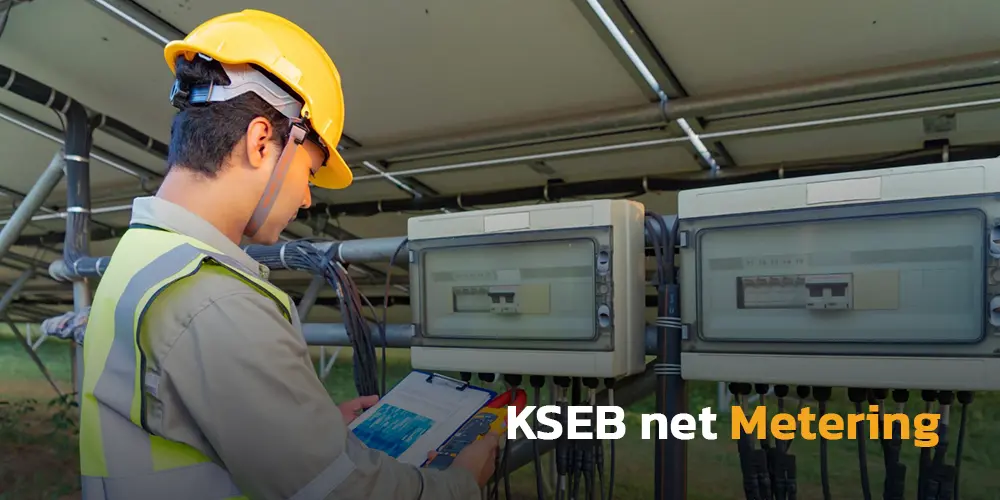
New KSERC regulations now allow commercial systems up to 500 kW to operate under net billing, where exported units are credited at market-linked rates. For systems up to 10 kW, traditional net metering continues without battery requirements. Virtual net metering is also available for multi-building commercial complexes sharing generation across connections.
4. Green Energy Financing
SIDBI, SBI, and several commercial banks offer priority-sector green energy loans at interest rates 1–2% below standard commercial lending. This matters when you're financing a ₹25–50 lakh installation.
Take Advantage of Financial Benefits That Actually Matter for Your Businesses
Get Free Consultation
Let's use real numbers instead of vague claims.
A 100 kW rooftop solar system in India:
- Installation cost: ₹38–45 lakh (before tax benefits)
- Annual energy generation: ~1,40,000 – 1,50,000 units
- Savings at ₹8/unit KSEB commercial tariff: ₹11.2 – 12 lakh per year
- Year 1 depreciation benefit (40%): ~₹15 lakh tax saving
- Effective payback period: 2.5 – 4 years
After payback, you're generating electricity at roughly ₹3–5 per unit against a grid tariff that will only keep rising. That's energy security with a known, locked-in cost something no KSEB connection can offer.
Commercial solar isn't a weekend job. A 100 kW system typically takes 4–6 weeks .and here's how the process flows:
Site Assessment : A qualified EPC team surveys your roof/surroundings, checks structural load capacity, shading patterns, electrical panel configuration, and your sanctioned load limit from KSEB. This determines your maximum permissible system size.
System Design : Panel layout, string configuration, inverter sizing, single-line diagram, and shadow analysis are prepared. For systems above 25 kW, always work with a licensed EPC (Engineering, Procurement & Construction) partner, not just a panel retailer.
KSEB Approvals : Your EPC partner applies for grid connection approval and net metering/net billing from KSEB. This is where unlicensed installers often cause delays.
Installation & Commissioning : Panel mounting, inverter installation, wiring, earthing, and testing. KSEB inspects and installs the net meter.
Monitoring Setup : Good installers provide remote monitoring dashboards so you can track generation, consumption, and grid export in real time.
The difference between a good and poor commercial solar installation isn't just the panels — it's who designs and implements the system. Here's what to check:
MNRE empanelment and KSEB approval status — Only work with vendors who are KSEB-empanelled and MNRE-certified. This is non-negotiable for subsidy processing and grid connection.
EPC capability, not just supply — Your installer should handle engineering design, procurement, and construction under one contract. Splitting responsibilities creates accountability gaps.
Track record on commercial projects — Ask for portfolio evidence of completed 50 kW+ installations. References from similar businesses (factory, hospital, hotel) are more relevant than ten residential jobs.
Warranty terms — Look for panel performance warranty of 25 years, inverter warranty of 10 years, and workmanship warranty of at least 5 years.
Post-installation support — Remote monitoring, AMC (Annual Maintenance Contract) options, and a local service team matter more than they seem upfront.
At, we specialise in commercial and industrial rooftop solar installations across Kerala. Our KSEB-empanelled team handles the complete process - from site survey and system design to KSEB approvals, installation, and post-commissioning monitoring.
If you're spending more than ₹30,000 a month on your electricity bill, a site assessment will show you exactly how much you can save and when you'll recover your investment. There's no obligation, and the numbers will speak for themselves.
Faq
1. Does a commercial solar system need batteries?
No, for on-grid installations. KSEB's net billing framework means excess power exports to the grid and gets credited to your account. Batteries only become relevant if you need backup power during grid outages.
2. What's the minimum system size for commercial installation?
Most EPC partners work with commercial systems from 25 kW upward. The right size depends on your sanctioned load and monthly consumption. A proper site assessment will determine the exact ceiling.
3. Which solar panel brands are best for commercial use in Kerala?
For commercial and industrial systems, Tier-1 manufacturers like Waaree, Adani Solar (TOPCon bifacial),Tata and Vikram Solar offer the best combination of efficiency, warranty support, and availability in Kerala,India. For inverters, Sungrow, Solis, and SolarEdge have established service networks in the state.